Dr. Shibley Telhami is pleased to share the latest study based on several years of public opinion polling by the University of Maryland Critical Issues Poll. The study analyzes trends in prejudice toward Jews and Muslims, compared with other religious, ethnic, and racial groups, based primarily on polls we have carried out over the past three years. The study includes a wide range of questions and substantial demographic analyses, including media viewership, education, and age, as well as racial and ethnic distributions. Here are just a few highlights:
- Americans report observing more incidents of prejudice against both Muslims and Jews compared to three years ago. In 2025, 53% say incidents of prejudice against Muslim Americans have increased and 54% say the same for Jewish Americans, both up 8 percentage points since 2022. In comparison, 55% say they observe more incidents of prejudice against Latino Americans, 43% against Black Americans, 40% against Asian Americans, 37% against White Americans, and 32% against Christian Americans.
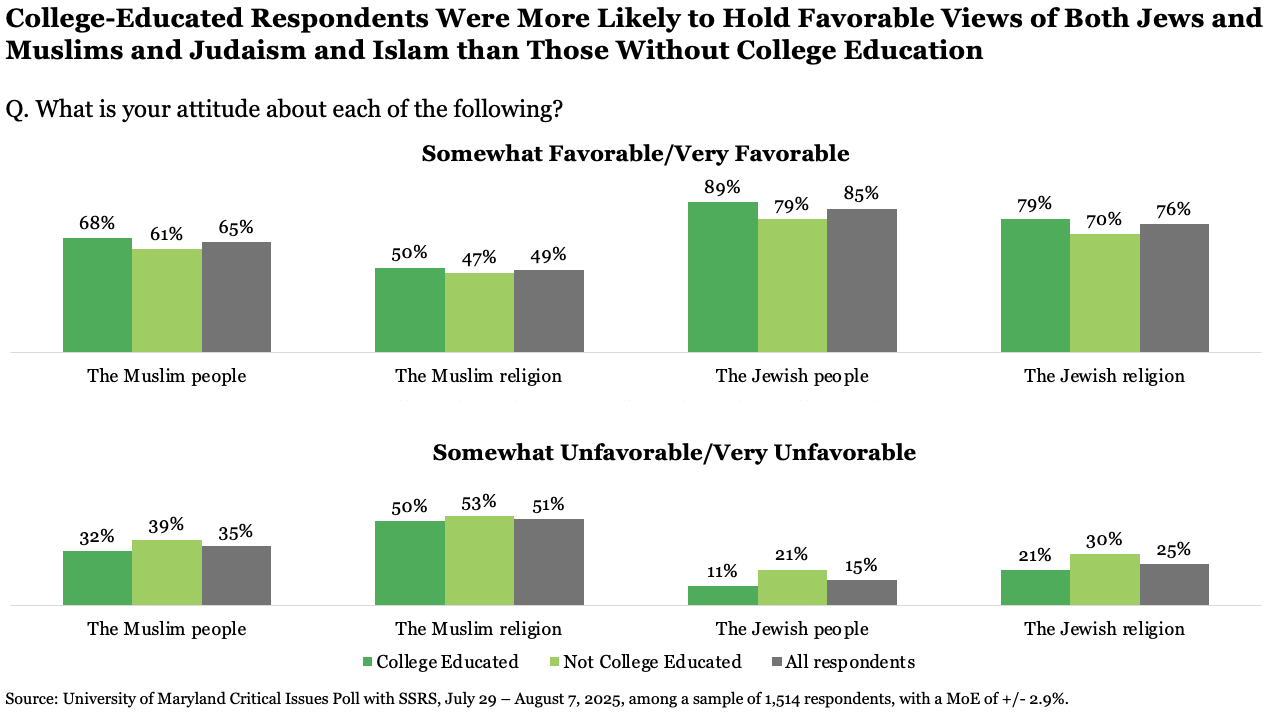
- Expressed prejudice remains most acute toward Muslims compared to Jews and other groups. Only 65% of Americans view Muslim people favorably (compared to 85% who view Jewish people favorably), and 49% view Islam favorably (compared to 76% who view Judaism favorably). More than one-third of respondents (36%) say they would not vote for a Muslim presidential candidate, higher than for candidates of any other religious group and more than double the share who say they would not vote for a Jewish candidate (16%).
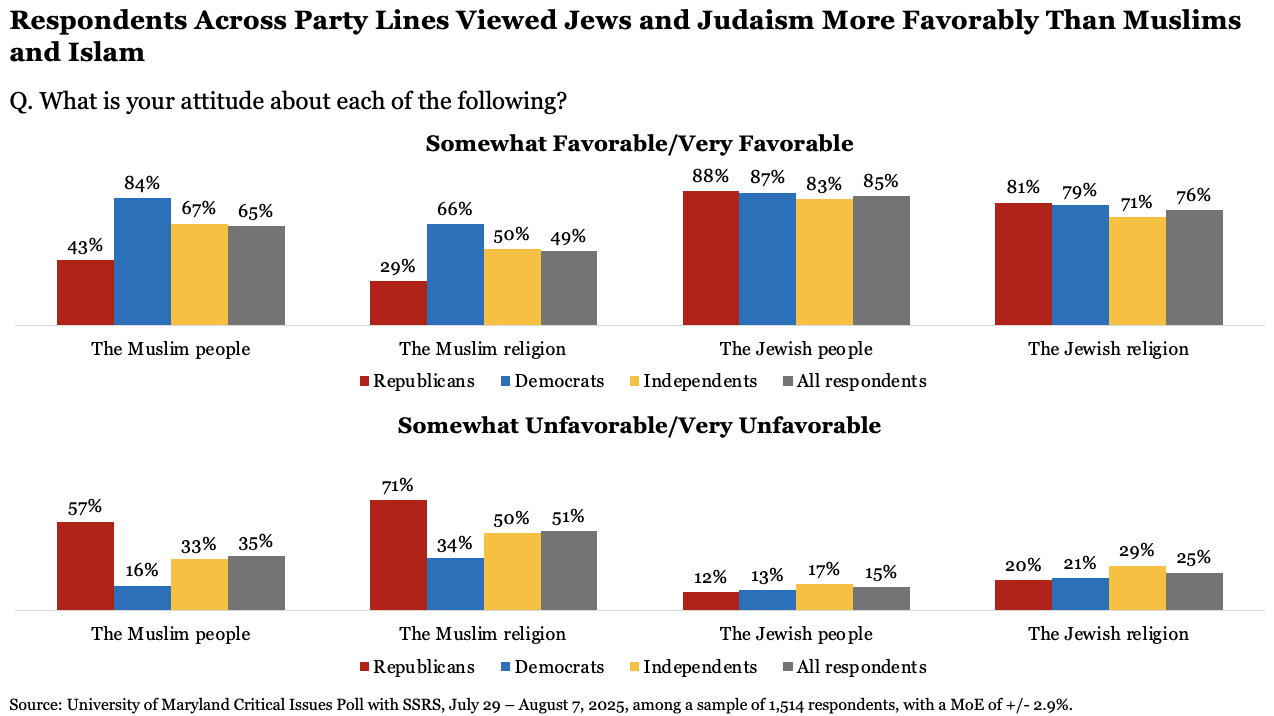
- College education is associated with lower levels of prejudice toward both Jews and Muslims and Judaism and Islam. Americans with college education express more favorable views of Jews and Muslims and Judaism and Islam compared to those without college education. Those with college education also report greater familiarity with both Jews and Muslims.
- Media consumption matters, but not, as is often suggested, in the difference between those who rely on social media and those who rely on mainstream media. Rather, the key distinction on the issues probed in this study is between those who primarily watch Fox News as a source of political information and those who primarily rely on other media, including social media and other mainstream media. Fox News emerges as the strongest driver of divergent views on Muslims, Jews, and antisemitism. Fox News viewers are far more likely than those who rely on either social media or other mainstream media to say that attitudes against Zionism and Israeli policies are antisemitic, a pattern that holds even when examining Republicans alone.
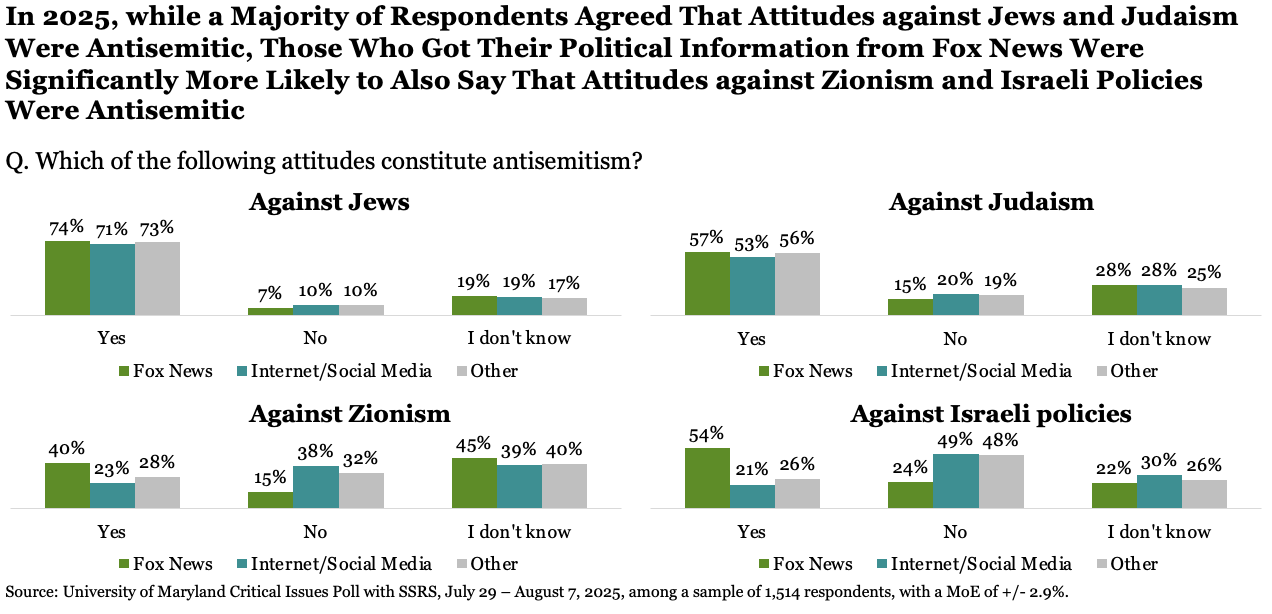
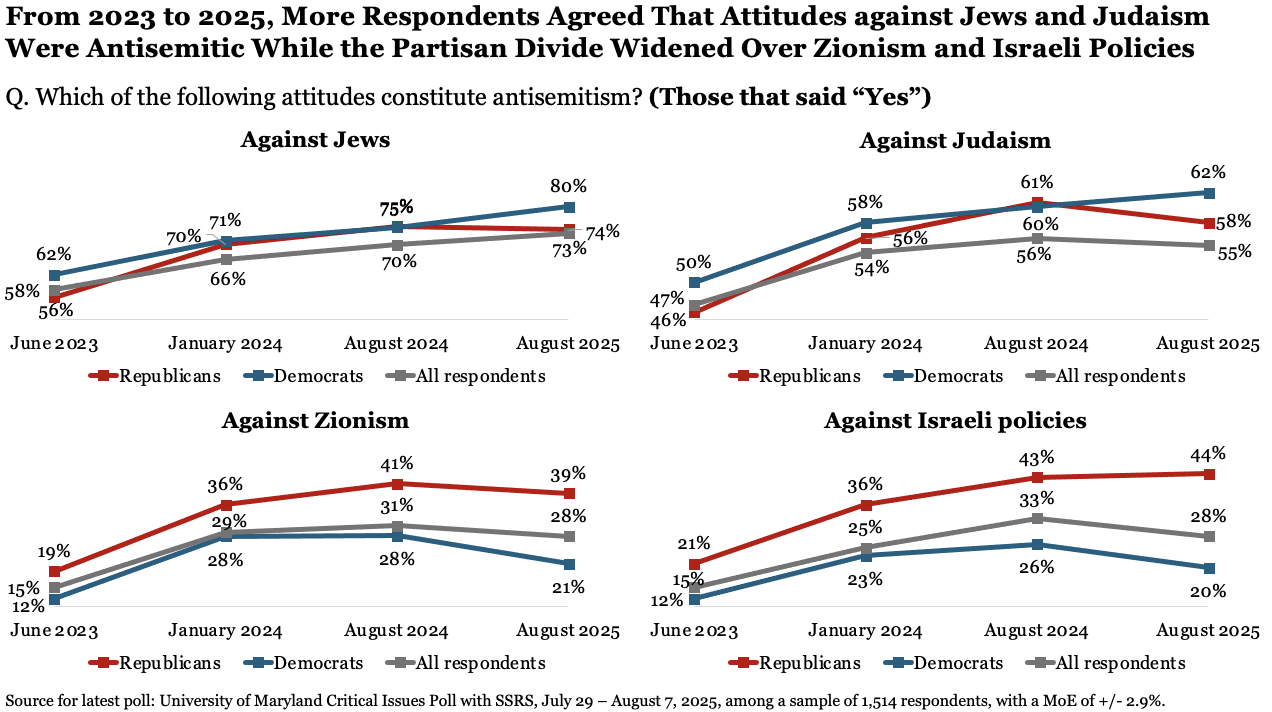
- From 2023 to 2025, more respondents agreed that attitudes against Jews and Judaism were antisemitic, while the partisan divide widened over Zionism and Israeli policies. Only a minority of all groups saw attitudes against Zionism and against Israeli policies as constituting antisemitism.
The full report includes a wide range of questions probing different angles of the central issues examined, as well as substantial demographic analyses of how different racial, ethnic, and religious groups are perceived to impact American society. The study also examines public attitudes toward democracy and human rights as foreign policy goals.
The full study can be found here, and the questionnaire can be found here.